Skip to content
Assorted Indian sweets arranged on white plates

Manohar Vegetarian Bakery

Indian Sweets Shop in Abbotsford

Indian Sweets Guide: Kaju Katli, Laddu and Barfi at Manohar Bakery Abbotsford

✓ 100% Vegetarian
⚡ Eggless Bakery
📍 12 branches in canada
🛡 Trusted Bakery Brand

Find the Right Mithai for Your Occasion

The easiest way to pick Indian sweets in Abbotsford is to start with the occasion, then look at the base ingredient. Festival gift boxes, everyday tea-time treats and winter wellness sweets each have a place on our counter at Manohar Vegetarian Bakery Cedar Lane. Browse the sweets below, then stop by or call ahead to build your mithai box.

Finding an Indian sweets shop in Abbotsford sounds simple until you're at the counter, staring at tray after tray. Here's what helps. Most mithai falls into two camps: everyday tea-time sweets and the fancier boxes you bring to a festival, a wedding or a family visit. Plenty of South Asian households here make that choice every week.

At Manohar Vegetarian Bakery Cedar Lane, we believe picking the right Indian sweet comes down to two things: the occasion and the ingredient base. Milk, chickpea flour, cashew, jaggery, multigrain. Each one gives a different bite and suits a different moment. Founded in 1966, our 100% vegetarian, eggless bakery still makes mithai the way we were taught, fresh and full of tradition. We've laid out our sweets so you can match the right one to your moment.

Below, you'll find each sweet explained in plain terms. Our cakes and baked goods have their own pages, so this one stays all about mithai.

Not sure what's on the trays today? Give our Cedar Lane shop a call, and we'll tell you what's fresh.

Our selection also includes Seerni. Ask our team about available quantities when you visit.
Loved by local customers

A little love on Uber Eats

See what customers are saying about Manohar Vegetarian Bakery in Abbotsford.

4.6 72 reviews

Kaju Katli Is the Go-To Gift for Festivals and Celebrations

Assorted Indian sweets arranged on white plates

You've got a Diwali visit this weekend, and you don't want to show up empty-handed. That's the moment many people reach for Kaju Katli.

Kaju Katli is a thin, diamond-shaped sweet made mainly from ground cashews and sugar. It's smooth and dense, with a soft bite that almost melts. The flavor is gentle and nutty, so it pleases kids and grandparents alike.

Kaju Katli is neat, travels well and looks lovely in a box, so people pick it for formal gifting. You bring it to a wedding, a new baby visit or an elder's home during festival season. The pieces stack cleanly, and the box still looks tidy when it's opened at the other end.

If you're new to Indian sweets and unsure what to give, Kaju Katli is the safe pick. It's widely known, and people rarely turn it down.

It's less of an everyday snack. Many families save Kaju Katli for celebrations, and that's part of what makes it feel special. During busy festival weeks, call before you come in so we can have your Kaju Katli box ready.

Motichoor and Boondi Laddu Round Out Every Festive Order

Assorted Indian sweets arranged on white plates

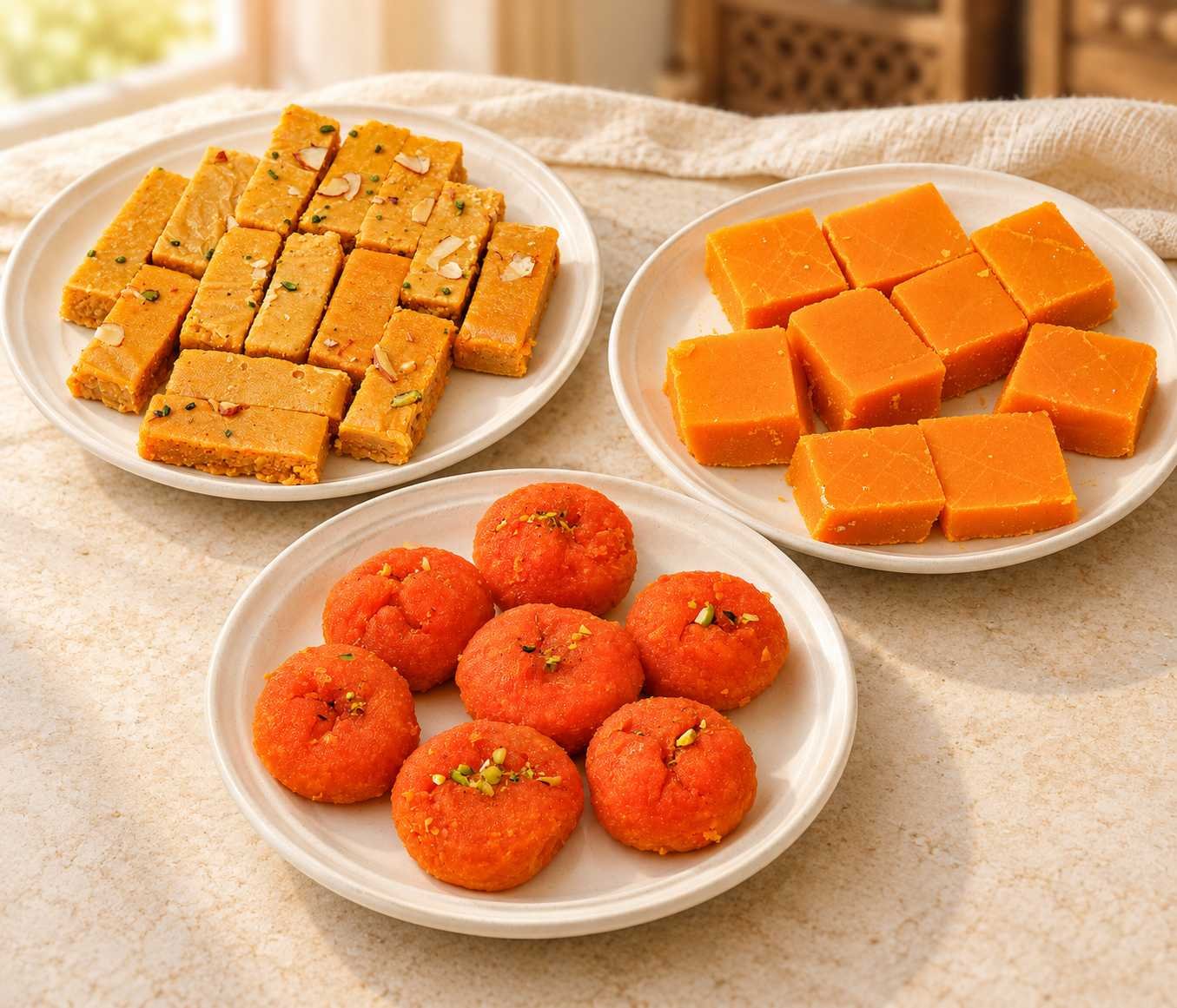
Motichoor Laddu is made from tiny pearls of fried gram flour, called boondi, pressed together into a soft, round ball. Boondi Laddu uses slightly bigger pearls, so it's a little firmer and you can see each drop. Both carry a light sweetness, often with a hint of cardamom.

These laddus show up on almost every festival tray in Abbotsford's Punjabi homes. People expect to see them at Lohri, at Vaisakhi and at family gatherings big and small. They're bright, cheerful and easy to share, one round at a time.

Gurdwaras in the Abbotsford area often bring a wave of laddu orders around festival dates. Families buy extra to share at the gurdwara, to hand out to guests or to send home with relatives. If you're ordering Motichoor and Boondi Laddu for a crowd, it helps to know these details before you call:

  • How many guests or families you're sharing with
  • Which festival date you need them for
  • Motichoor, Boondi or a mix of both
  • Boxed or arranged on a tray

So a little planning goes a long way, especially in the week before a big festival.

Besan Barfi Is the Everyday Choice for Chickpea-Flour Sweets

Assorted Indian sweets arranged on white plates

Want something sweet with your evening chai that isn't too heavy? Besan Barfi is a good place to start.

To make Besan Barfi, we slowly roast chickpea flour (besan) in ghee until it smells nutty and toasty. Then we sweeten it, let it set and cut it into squares. The result has a firmer, grainier bite and a warm, roasted taste.

Here's the key difference. Besan Barfi uses chickpea flour as its base, giving it a grainier, nuttier bite. Khoya Barfi uses milk solids, so it's denser and richer. If you like a sweet that's a little lighter and less milky, Besan Barfi is usually the one.

The roasting step matters most. Rush it and the barfi tastes raw. Take it slow and you get that deep, golden flavor people remember from home.

Families keep Besan Barfi on hand all week. You might eat a few pieces with tea after school or work, or put out a plate when a neighbor drops by. It also sits nicely in a mixed box next to richer sweets.

See the full Besan Barfi selection at our Cedar Lane shop before your next visit, and pick out the pieces you like best.

Khoya Barfi and Roasted Khoya Barfi Bring Classic Milk-Based Richness

Assorted Indian sweets arranged on white plates

If Besan Barfi is the lighter everyday sweet, Khoya Barfi is the rich one you bring out for guests. Khoya is milk that's been cooked down slowly until only the thick milk solids are left. We sweeten that khoya and set it into barfi. It's dense, soft and creamy, with a clean, milky taste.

Roasted Khoya Barfi starts with the same khoya, but we cook it longer, until it turns golden brown. That extra time gives it a deeper, caramel-like flavor and a darker color. Some people stick with the plain version. Others won't go back after their first bite of the roasted one.

Both are classic milk sweets that have been on Punjabi tables for generations.

Because Khoya Barfi is milk-based, it's denser than Besan Barfi, which uses chickpea flour and has a lighter, grainier texture. Choose Khoya Barfi when you want richness. Choose besan when you want something nuttier for everyday snacking.

Khoya Barfi works well for guests, small gifts and family visits. It also pairs nicely with Kaju Katli in a mixed box. Fresh milk sweets taste best soon after you buy them, so pick yours up close to your event.

Patisa and Balushahi Cover Two Different Styles of Fried Sweets

Assorted Indian sweets arranged on white plates

Two fried sweets, two very different bites.

Patisa is dry, flaky and layered. It's made by working gram flour and ghee into thin strands that set into a light, crumbly block. It breaks apart in soft flakes and almost melts on your tongue. Because it's dry, Patisa holds up well in a box and travels easily, so it's a good choice for gifting.

Balushahi is the opposite. It's a small round of dough, fried slowly in ghee and then soaked in sugar syrup. The outside gets a shiny, glazed finish, and the inside stays soft and a little flaky. It's sweeter and stickier, more of an indulgent treat to enjoy at home. Here's a quick way to choose between Patisa and Balushahi:

  • Picking a gift that travels well? Go with Patisa.
  • Want something soft and syrupy with tea? Try Balushahi.
  • Can't decide? Get a few of each and let the family vote.

Patisa is dry and crumbly, while Balushahi is syrup-soaked and soft. That one difference usually settles it.

Dhodha and Mathura Peda Carry Regional Punjabi Tradition

Assorted Indian sweets arranged on white plates

Some sweets aren't just sweets. They're tied to a place, and people come looking for them by name.

Dhodha comes from Punjab. It's made by cooking milk and wheat together for a long time, until it turns dark, grainy and dense. It has a chewy texture and a deep, almost toffee-like taste, often with nuts mixed in. For many Punjabi families in Abbotsford, Dhodha is a taste of home.

Mathura Peda comes from the Mathura tradition. It's made from khoya that's cooked until lightly caramelized, then shaped into small rounds. It's soft and smooth and melts in your mouth, with a gentle browned-milk flavor.

Texture is the easy way to tell them apart. Dhodha is grainy and chewy. Mathura Peda is soft and melt-in-your-mouth.

People tend to get particular about these two. If you grew up eating one of them, you probably already know which one you want, and you'll know right away if it tastes the way it should. We take that seriously in our kitchen.

Dhodha and Mathura Peda both make thoughtful gifts for someone who misses the flavors they grew up with.

Khoya Pinni and Khaskhas Pinni Support Winter Wellness Traditions

Assorted Indian sweets arranged on white plates

Once the cold, wet months settle over Abbotsford, pinni starts showing up on kitchen counters around town. Pinni is a dense, round, ladoo-style sweet. Khoya Pinni is made with milk solids, roasted flour, ghee and nuts. Khaskhas Pinni adds poppy seeds for a slightly nutty crunch. Both are rich and filling, and one piece goes a long way.

In Punjabi tradition, pinni is a winter sweet. Families eat it to feel warm on chilly mornings, and it's often made for new mothers and older relatives as a comforting treat through the season. Abbotsford's damp, cold winters are a big reason pinni stays so tied to the season for Punjabi households here. Families usually buy these winter pinni for:

  • A new mother in the family
  • Grandparents or older relatives
  • Cold mornings with a cup of chai
  • Relatives visiting for the winter

This pair is the richer, more indulgent winter sweet. Panjeeri - Multigrain is the lighter, more fortifying option. If you're shopping for someone special this winter, the choice often comes down to how rich they like it.

Panjeeri - Multigrain Offers a Health-Focused Winter Sweet

Assorted Indian sweets arranged on white plates

Not every winter sweet has to be heavy.

Panjeeri - Multigrain is a loose, crumbly mix made from roasted grains and flours, cooked in ghee and mixed with nuts, seeds and a little sweetness. It isn't shaped into balls or bars. You eat it by the spoonful, often with warm milk or tea.

Many families think of Panjeeri as the fortifying sweet. In Punjabi homes, it's traditionally made for new mothers after a birth and for elderly relatives during the colder months. The multigrain mix gives it a wholesome, toasty flavor that feels like real home cooking.

Panjeeri is the healthier, multigrain option, while Khoya Pinni is richer and more indulgent. If someone in your family wants a winter treat that feels lighter, Panjeeri - Multigrain is usually the better fit.

Panjeeri doesn't get as much attention as the boxed festival sweets, but a warm spoonful on a cold morning is hard to beat. Keep it in a sealed container at home so it stays fresh.

Desi Ghee and Sugar Free Sweets Meet a Growing Need in Abbotsford

Assorted Indian sweets arranged on white plates

Watching your sugar shouldn't mean sitting out when the sweet box goes around. Our Desi Ghee & Sugar Free line is mithai made with desi ghee and sugar substitutes instead of regular sugar. The goal is simple: keep the taste and texture as close to the traditional recipe as we can. You still get the richness of ghee and the familiar shapes and flavors.

A lot of people assume sugar-free mithai won't taste right. It doesn't have to be that way. The method stays the same. Only the sweetener changes.

Desi Ghee & Sugar Free sweets suit family members managing diabetes, anyone cutting back on sugar and guests at a gathering who'd like their own option. If you have a health condition, check with your doctor about what's right for you.

One thing to keep clear: Desi Ghee & Sugar Free is a sweets category made without added sugar. It's separate from our plain Desi Ghee, which is a cooking ingredient rather than a sweet. It's easy to mix the two up on a menu, so we like to spell it out.

We're glad to tell you what's in this line when you visit.

Gur Paare, Shakar Paare and Gur Mathi Are Seasonal Tea-Time Snacks

Assorted Indian sweets arranged on white plates

Lots of Punjabi kitchens keep a tin of something crunchy by the kettle. Often, it's Gur Paare.

Gur Paare, Shakar Paare and Gur Mathi are small fried dough snacks. Gur Paare and Gur Mathi are sweetened with gur, or jaggery, which gives them a warm, earthy sweetness. Shakar Paare are coated in sugar instead, so they taste lighter and a little crisper. Mathi is flat and round, while paare are cut into small diamond or square bites.

These are everyday snacks, not formal gifts. You grab a handful with chai, pack some for work or set out a bowl when friends stop by. Gur-based snacks are especially popular in winter, when jaggery feels warm and comforting.

Gur Paare, Shakar Paare and Gur Mathi are dry, fried snacks for everyday tea-time, while the pinni varieties are dense sweets tied to winter wellness traditions. If you want something to nibble rather than something to gift, these are the ones to pick.

They keep well in a sealed tin, so many families pick up a bigger batch to last through a few weeks of tea breaks.

Visit Manohar Vegetarian Bakery on Cedar Lane in Abbotsford, or call ahead and we'll have your mithai box ready when you arrive.

Frequently Asked Questions

Common questions about Indian sweets shop in Abbotsford

Where can I find the best Indian sweets in Abbotsford?

Manohar Vegetarian Bakery on Cedar Lane has made mithai since 1966, using the same traditional methods the whole time. We're 100% vegetarian and eggless, so you get fresh trays of Kaju Katli, laddu and barfi made the way they were always meant to taste. Stop by or call ahead if you want a specific sweet ready for pickup.

How do I choose between Besan Barfi and Khoya Barfi?

Pick Besan Barfi for a lighter, nuttier everyday snack, and Khoya Barfi when you want something richer for guests. Besan Barfi uses roasted chickpea flour, giving it a grainier bite. Khoya Barfi is milk-based, so it's denser and creamier. Both work well with evening chai, but Khoya Barfi feels more special for company.

What Indian sweets should I bring to a festival or family visit in Abbotsford?

Kaju Katli is the safest pick for festivals, weddings or visiting elders, since it travels well and looks tidy in a box. Motichoor and Boondi Laddu are also common at Lohri, Vaisakhi and gurdwara gatherings. If you're ordering for a crowd, call ahead with your guest count and festival date.

Can I order a custom mithai box for a large gathering in Abbotsford?

Yes, call our Cedar Lane shop ahead of your event so we can build your box to size. Let us know your guest count, the occasion, and whether you want a mix of laddu, barfi or Kaju Katli. This helps us have everything fresh and ready when you arrive, especially during busy festival weeks.

Does a regular grocery store sell the same quality Indian sweets as a dedicated sweet shop?

Not usually. Grocery store sweets are often made in bulk and sit longer before they reach the shelf. At Manohar Vegetarian Bakery, we make mithai fresh using traditional recipes, so the texture and taste stay closer to what you'd expect from a home kitchen.

What's the difference between everyday sweets and festival sweets?

Everyday sweets like Besan Barfi are lighter and meant for casual tea-time snacking throughout the week. Festival sweets like Kaju Katli and laddu are richer, dressier, and meant for gifting or sharing at celebrations. Thinking about the occasion first makes it easier to pick the right one at the counter.

Ready to Get Started?

Call +1 250-251-0599 now for a free estimate.

☎ Call Now +1 250-251-0599 📅 Call now for a free estimate
Order on Uber Eats